

Read Spanish books with translation
Every Spanish sentence is shown side by side with its English translation. You read naturally, absorbing Spanish vocabulary and grammar in context, no stopping to look up words.
- No dictionary needed, English translation is always right there
- Natural absorption, learn Spanish grammar and vocabulary from real texts
- Real books, not textbook exercises, but stories you actually enjoy
Listen and read Spanish at the same time
Turn on the audio and follow along with your eyes, a great way to level up your Spanish listening and pronunciation.
- Native pronunciation, hear every word spoken naturally
- Word-by-word sync, the text highlights as you listen
- Train your ear, build confident comprehension at natural pace
- Made for shadowing, play any sentence, slow it down and say it along with the voice
The most proven way to remember words
Spaced repetition is one of the most rigorously studied learning techniques of the last century, repeatedly shown to outperform cramming and re-reading by a wide margin. Lingo7 tracks every word you tap while reading and brings it back for review right before you'd forget it. 12 different exercises, from quick recognition to active recall, listening and typing, strengthen memory from every angle.
See a word and pick the correct translation from four options
Listen to a word and choose the correct translation, trains your ear
Build the word letter by letter from scrambled characters
See a word and a translation, quickly decide if it's correct
Pronounce the word and get instant accuracy feedback
Try to recall the translation from memory before revealing it
Read absolutely any book in Spanish
Your favorite novel, your work textbook, your kid's bedtime story, drop any EPUB, PDF or DOCX into Lingo7 and it becomes a parallel-reading experience in Spanish. No book is off limits.
Your book. Any book. In Spanish.
Drop in an EPUB, PDF or DOCX and Lingo7 instantly turns every page into parallel reading, original on one side, Spanish translation on the other. Audio, word saving and spaced-repetition work out of the box.
- Absolutely any book, your library, not ours
- Parallel translation side by side with the original
- Native audio narration on every page
- Save and review every new word, spaced repetition built in
Read any book, adapted for you
Want to read a real book in Spanish, but the words and grammar are still too hard? Lingo7 rewrites the whole book in easier Spanish, same story, same characters, same ending. Just simpler words and easier grammar, so you can actually read it through.
What this means for you:
- Read what you love, not textbook stories matched to your level
- Classics at intermediate, Tolstoy, Dostoevsky, García Márquez, Hugo
- Re-read later at a harder level, same book, tougher Spanish, as you improve
No hay nada más cierto que la fisonomía, tomada en conexión con los modales. El arte de leer ese libro del cual la Sabiduría Eterna obliga a toda criatura humana a presentar su propia página con el carácter individual escrito en ella, es difícil, quizás, y se estudia poco.
La fisionomía es verdadera cuando miras el comportamiento. El arte de leer rostros con su carácter es difícil. Tal vez requiera habilidad natural. Requiere paciencia y esfuerzo.
Or pick from our library
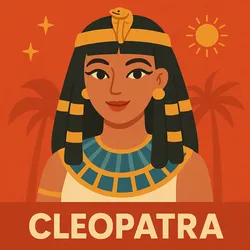
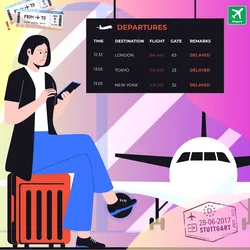
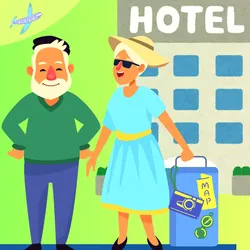
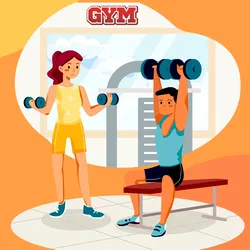
Hand-picked stories, summaries and articles, already prepared for Spanish with audio and parallel translation.








































What readers say
Recent reviews from the App Store and Google Play, quoted the way they were written.
- Pasha Ahsap
A very useful app for learning a language: you can translate every unfamiliar word with a tap right away and save it.
- Esteban Velarde
amazing app very useful Me encantó 🙌🏻☺️
- Айгуль Оспанова
great app
-
Great app and really helpful! ⭐️
I really enjoyed using the app! It’s very helpful, easy to use, and I really liked the way everything is organized. I definitely enjoyed my experience and would recommend it to others. 😊
- A Rimmer
I can’t recommend this app enough! I use it to refine my Spanish vocabulary and learn Bulgarian, and I love that you can keep multiple languages and their word lists separate. You can read your own books with instant translation, save new words and use spaced repetition to remember them. The pictures really help words stick, and there are no distracting animations or gimmicky rewards. Easily the best language app I’ve used!
- Наталка С.
The best. You can learn words. You can listen to speech with lively intonation. The texts are very interesting. Adapted and original: first I read the adaptation, then switch to the original. You can upload your own book, translate it, and listen and read at the same time.
- Caspian Sutherland
Best app I've ever used
- Viktor
The app is good, no doubt about it. I recommend it. I did not even expect this. Lots of literature for every taste. Read the simplified version or the original. You build your own dictionary. You take quizzes, very original ones. You can have a conversation on different topics. Super! And not expensive.
- Mayur Luhadia
I have already had a yearly subscription for LINGO 7. This app is an excellent resource for anyone looking to improve their English skills. The Hindi translations and detailed explanations provided for each story are incredibly helpful and effective for learners like me.
-
Amazing app! For reading lovers this is an incredible world of different languages. I recommend it! Delighted!
The app works great! Special thanks for the speed selection! I really liked that you can switch languages. Listen to a book in Russian and read the English translation right there, or listen in English and read the Russian translation.
- Dmitry Gavrilov
The idea of the app is great, it's very useful, and I especially love the Library and saving words to the dictionary in a basic form. I would say a big thanks to the developer, who made some fixes and implementations by the mine propositions!
- Дмитрий Федешов
I studied French at university and dropped it after graduating. A couple of years later I tried watching a film without subtitles and realised my level had slipped. I started reading in the app bit by bit, simple stories at first. Now I read novels and understand about 80 percent without hints. The audio helped a lot too, my listening got better.
- Antonino Venticinque
It is the best.
- Полина Козлова
My English was B1 and it felt like I was stuck. Courses were boring, series with subtitles did not help. I started reading books in the app, and in six months my vocabulary roughly tripled. Now I read articles and documentation without translation. The main thing is that you learn not abstract words but the ones that actually come up in texts.
-
👍🏻
Norwegian is hard to find anywhere. Here there are both texts and audio. I listen to the narration on my way to work and read in the evening. It is handy that you can save words and review them later, they do not get lost.
-
Very convenient for learning
I read in Spanish before bed. The translation is right there, the audio is good. I can feel the progress.
- shanabbasi
I've tried several language learning apps, and Lingo7 stands out because of its combination of reading, audio, and flashcards. The parallel reading feature is especially helpful for understanding new words in context. The app is easy to navigate and makes daily practice feel productive rather than boring. A great tool for improving language skills step by step.
- Nour Abo elmagd
Georgian! I did not expect to find it. There are texts, the translation works, so does the audio. Thank you.
-
Good parallel reading app
A very convenient app for parallel reading. I started reading books and articles in the original without constantly translating every word. New words stick much more easily, and in a short time I began to understand spoken English noticeably better. The interface is simple and really motivates you to read every day.
- Кирилл Шапорев
I started learning Turkish recently. The texts are interesting, the translation is clear. I like that the audio plays in sync, so you hear right away how to pronounce things.
- Tatyana Naumova
The app helped me a lot with learning Serbian
- Савелий Кулаков
Great app! I have tried others, but the approach here is more interesting. I have been using it for a little over a week and it really helps. The main thing is to make an effort yourself. There were some unstable moments, but everything was fixed quickly. A huge plus is the very responsive developer.
- konstantin
Convenient for German. You read, save words, review them. Everything is simple, nothing extra.
- Randy S
Just what I was looking for. Easy books to read to supplement vocabulary learned.
- Kristina Emad
Great app, convenient interface and pleasant design. Everything works fast and without problems.
- Artem Stavilov
My child reads English fairy tales with the translation and asks for more. Better than any textbook.
- Ирина Новицкая
A great app for learning foreign languages.
- Zeynep Ornek
I use the audio reading feature in Lingo7, and it has been a real breakthrough for me. The audio tracks are clear and well synchronised, which makes it easy to follow the text and improve pronunciation. The choice of texts is varied and engaging, covering different topics and genres. I like being able to adjust the speed and repeat fragments, which really helps me focus on difficult words.
- Макс Рахвалов
I have always wanted to learn German, and in this app everything is much more accessible and clearer than in similar ones. I have started with the flashcards for now, and I will move on to reading and audio once I have learned enough words. Overall the app is a 10 out of 10.
-
😉
I am learning Spanish for a move abroad. The audio is very high quality and sounds natural. The parallel text is convenient.
- Katreena Katreena
Installed it out of curiosity, and now I have been using it every day for 3 months. I am learning French. What won me over: real books, not made-up dialogues. Saving words plus review, and the vocabulary grows before your eyes.
-
I like it!
I moved to Czechia a year ago and needed to learn Czech quickly for work. Not many apps have it, I was surprised. I read texts with the translation, and the flashcards helped me memorise words. Now I talk at work and read documents. Thanks to the developers.
- Юлия Близнюк
I like that there is no gamification and no silly streaks here. You just read a book and learn. Like an adult. Thank you for the serious approach to language learning.
-
Review
I am 63, and we go to Italy every year. I read a little before bed. The stories are interesting and the translation is right there, so you do not give up. The interface is simple. After 4 months I actually talked to a waiter in Rome. He was surprised!
- Tala Tolstoy
I have been learning Turkish for six months. I tried different apps before, and they were all grammar drills. Here you just read an interesting text with the translation right there. It sticks by itself. The most natural way to learn a language.
- Nadezhda Nadezhda
I am hooked on this app! The library is huge: classics, retellings, stories for different levels. The main difference is that you actually READ instead of just doing exercises. It feels like real studying.
- Rosita Rose
I needed Portuguese to work with a team from Brazil. Reading and audio at the same time is very effective, you train both listening and reading comprehension. The spaced repetition cards helped me build vocabulary quickly. After 6 weeks I could already follow meetings.
-
👍
I have tried every language app out there. What sets this one apart is parallel reading. Polyglots have learned this way for centuries, only here it is all in a convenient app. Tap a word and it gets saved, then you get quizzed at the right intervals. Much more natural than cramming flashcards in Anki.
- Евгения Н
a great service for practising English. you can pick a book by your level, the library is big enough for that. There are audio and text formats. The subscription is very reasonably priced.
- Pixel
I like it! It supports Serbian, five stars for that!
- Denis Nefedov
I have been looking for an app like this for a long time)
- Вася Козлодоев
the idea and the execution get a 5+. There is always something to improve, but right now this is the only app with Serbian books. well done! thank you!
Polyglot secrets
The 5 principles every polyglot uses, built into Lingo7.
Principle: Extensive reading, consuming large volumes of text you can mostly understand, is one of the most research-backed paths to fluency (Krashen's input hypothesis). The trick is removing friction so you can read a lot without stopping.
How Lingo7 helps: Parallel translation sits right next to the original, no dictionary lookups, no breaking flow. Turbo mode highlights words in rhythm if you lose your place, so you can devour pages instead of decoding them.
Principle: Spaced repetition is one of the most rigorously studied learning techniques of the last century. The idea: review each word just before you would have forgotten it, that's when a single repetition strengthens memory the most.
How Lingo7 helps: Lingo7's spaced repetition system tracks every word you save and brings it back at the optimal interval. You don't schedule anything, the algorithm handles timing, and 12 different exercises keep memory sharp from every angle.
Principle: Polyglots don't memorize every word in order, they focus on the ones that pay off. High-frequency words dominate everyday language: a few hundred of the most common words are enough to start understanding real books, conversations, and articles.
How Lingo7 helps: Two frequency-ranked starter collections built from corpus data, the 100 most popular words to get off the ground, then 250 more for real traction. Available in 49 languages. Learn the minimum that gives you the maximum, instead of chasing a dictionary you'll never finish.
Principle: Boring textbooks kill motivation. Polyglots choose texts they actually enjoy, favorite books, articles, scripts, because interest is what sustains daily practice for months and years, not willpower.
How Lingo7 helps: A large, growing library across genres, classic novels, contemporary articles, topic summaries. You pick what you actually care about, not what a textbook assigns. Interest does the hard work of keeping you consistent.
Principle: Real progress happens when reading, listening, vocabulary, and pronunciation reinforce each other. A word you've read, heard, and pronounced is remembered in a way that isolated drilling can't match, overall results grow stronger than the sum of individual exercises.
How Lingo7 helps: One session covers all four: you read a page with parallel translation, listen to the narration with word-by-word highlighting, tap new words to save them, and shadow the sentences you just read to train pronunciation. Four skills trained in parallel, in 7-15 minutes a day.
Principle: Shadowing means saying what you hear while you still hear it, a beat behind the speaker, copying the rhythm and intonation. Interpreters train this way, and studies link it to more fluent, clearer speech and, for beginners, sharper listening. It works only on passages you already understand.
How Lingo7 helps: Read a page in Spanish with the translation until it makes sense, then turn on Audio mode: every sentence gets its own play button. Play a sentence, say it along with the voice, slow the speed down while you learn it, hide the translation and repeat by ear. Five or six passes and the sentence is yours.
The FSI estimates 750 hours (24-30 weeks) for English speakers to reach professional proficiency. Spanish is Category I, the easiest tier. Regular reading practice can help you reach conversational fluency even faster due to transparent spelling and many English cognates.
Both are FSI Category I, but Spanish pronunciation is more straightforward since it is almost perfectly phonetic. French has more complex pronunciation rules. However, French vocabulary may be slightly more familiar to English speakers due to the Norman influence on English.
Major differences exist between Castilian (Spain) and Latin American Spanish in pronunciation, vocabulary, and grammar. Latin American Spanish generally does not use the "vosotros" form and has different consonant sounds. Reading literature from various Spanish-speaking countries exposes you to these variations naturally.
Spanish is the world's fourth most-spoken language with 559 million speakers. It is the second most-spoken native language after Mandarin. Knowing Spanish opens career opportunities across the Americas, Spain, and in the growing US Hispanic market.
Tips for Learning Spanish Through Reading
Expert guides and practical advice to help you read books in Spanish.
Best Books to Learn Spanish Through Reading: A Level-by-Level Guide from Beginner to Advanced
A curated, honest guide to the best Spanish books for learners at every level, from A1 graded readers to García Márquez. Learn Spanish through reading the right book at the right time.
Read more →MethodologyCEFR Levels for Readers: What A1 to C2 Actually Mean for Reading
What CEFR level can read books? A reader's guide to A1, A2, B1, B2, C1, C2: the can-do descriptors, rough vocabulary size, and what to read at each level.
Read more →MethodologyComprehensible Input Explained: What It Is, Krashen's i+1, and How to Find Yours
What comprehensible input is, Krashen's input hypothesis and the i+1 idea, why it matters, its honest limits, and how to find your level by CEFR with reading.
Read more →Why learn Spanish?
Spanish connects you with over half a billion speakers across 20 countries, from the literary works of Garcia Marquez to business opportunities throughout Latin America and Spain.
Spanish has remarkably consistent phonetic spelling, a subjunctive mood used extensively in everyday speech, and inverted punctuation marks that signal questions and exclamations before they begin.
Find the best Spanish books for your level →
The best apps to read books in Spanish, compared →
Want to learn a language effectively?
Download Lingo7 and start learning a language today
Scan to get the app